
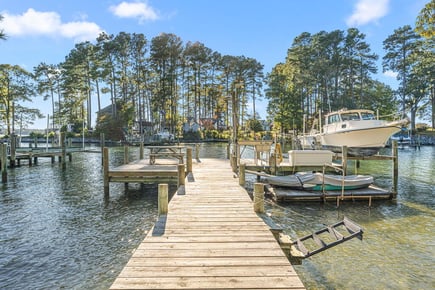
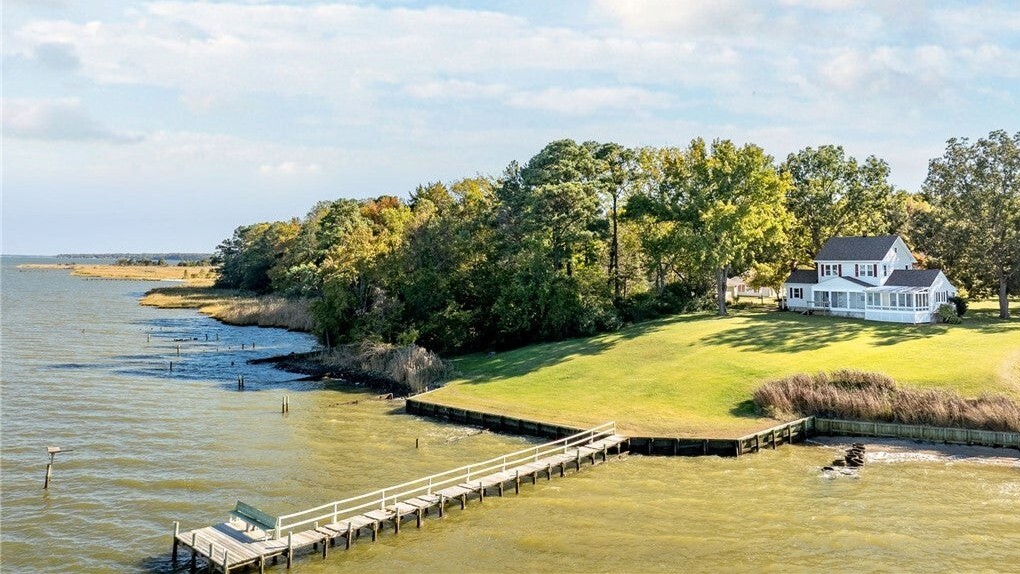
 Owning a private dock is one of the biggest perks of living on the water. There’s something special about having a relaxing place to sip a cup of coffee, spend an afternoon fishing or head out on a boat or kayak whenever you feel like it. Whether you’re spending time with family and friends or taking a quiet moment to yourself, a dock makes it easy to enjoy life on the water.
But building a dock takes a lot of planning. You need to consider how you want to use it, whether your property can accommodate it and what permits or approvals are required.
If you’re thinking about building a dock at your waterfront home in Tidewater Virginia, here’s what you should know.
Deciding how you want to use your dock
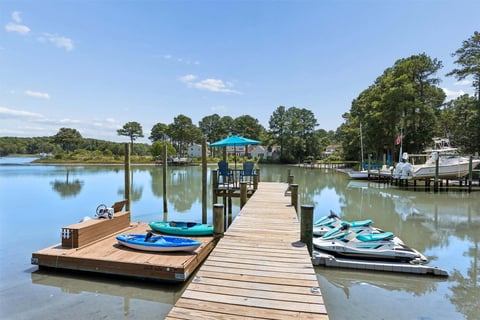 Before you start designing your dock, think about how you plan to use it. Do you want a place to keep your boat, launch a kayak, go fishing or simply relax by the water? Your plans will help determine the dock’s size, layout and any additional features you might want.
Here are a few things to consider:
- Boating: If you plan to keep a boat at your dock, you’ll need enough water depth to accommodate it, along with space to safely approach and secure the vessel. You may also want a boat lift to keep it out of the water when you’re not using it.
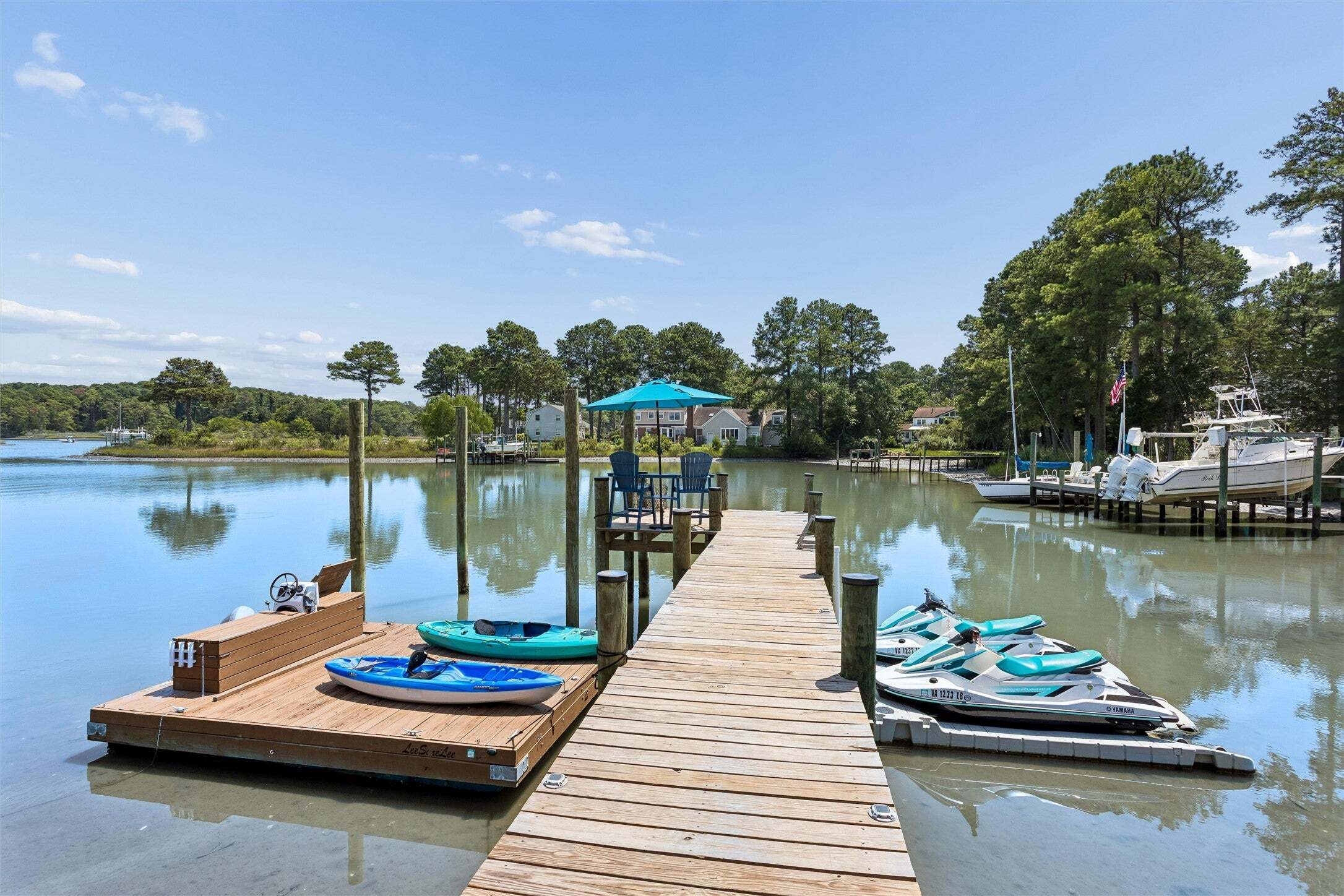
- Kayaking/Paddleboarding/Canoeing: A lower platform or floating dock can make it easier to get on and off your kayak, paddleboard or canoe.
- Fishing: If you enjoy fishing, consider leaving enough room for multiple people to cast their lines. Built-in benches, rod holders and a fish-cleaning station are other options.
- Jet skis: You can keep jet skis secured alongside your dock or add a specialized lift or floating platform to store them out of the water.
- Relaxing and entertaining: A larger platform can provide room for outdoor furniture, giving you a place to enjoy meals, spend time with friends or take in the waterfront views.
Making sure your property can accommodate a dock
Your property’s water depth, shoreline conditions and any construction restrictions will help determine what kind of dock you can build.
Michael Early, owner of Early Marine Construction, who has worked in marine construction since 2009, says one of the first things he considers is where homeowners would like their dock to go.
“The location the homeowner picks is usually the starting point. Then we look at water depth, which is especially important because most of our customers want a boat lift,” Early said.
Water depth and shoreline conditions
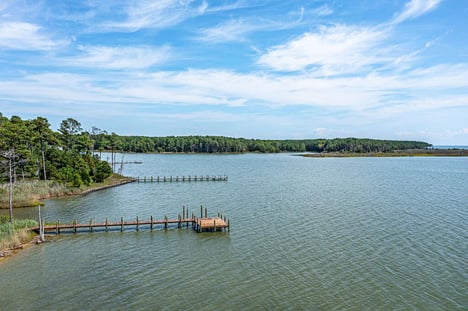 Water depth can be tricky in Tidewater Virginia because of the changing tides. A creek might be deep enough at high tide but too shallow when the tide goes out. Depending on the location, you may need a longer dock to reach water deep enough for your boat.
Shoreline conditions can also affect construction. Marshes, wetlands, steep banks and dense vegetation can make the process more challenging. You’ll need to consider how you’ll reach the dock from your yard and whether a walkway or stairs will be necessary.
Property restrictions
It’s also a good idea to review your property survey, deed, easements and any homeowners association rules. Some communities restrict dock size or placement, while certain waterfront properties don’t allow private docks at all.
Understanding permits and approvals
Building a dock may require approval from several government agencies, depending on the location and proposed design.
For many projects, the process begins with a Joint Permit Application (JPA), which allows the appropriate agencies to review the plans.
Early says completing the application involves providing information about the proposed dock, including drawings and details about the shoreline.
“After you’ve done the drawings, filled out the paperwork and everything, it usually takes about 90 days to hear back,” Early said.
Those agencies may include:
- Local government: Your city or county may have zoning, building or wetlands requirements.
- Virginia Marine Resources Commission (VMRC): Oversees certain construction activities in tidal waters and on state-owned submerged lands.
- Virginia Department of Environmental Quality (DEQ): May review projects affecting regulated waters or wetlands.
- U.S. Army Corps of Engineers: May require federal authorization for construction in navigable waters or other federally regulated areas.
The overall permitting process can take several months, particularly if additional information or approvals are needed.
If your property includes protected wetlands or falls within a Chesapeake Bay Resource Protection Area, there may also be restrictions on vegetation clearing and shoreline disturbance.
An experienced marine contractor can help determine which approvals are necessary and may handle the applications for you.
Working with a contractor: costs, timelines and what to expect
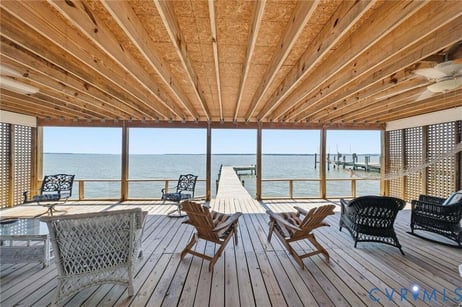 Once you have an idea of what you want, an experienced marine contractor can help you determine what’s possible and develop a plan.
During an initial visit, the contractor will assess the site, discuss your options and recommend a design. Docks generally fall into two categories: fixed docks, supported by pilings driven into the bottom, and floating docks, which rise and fall with changing water levels. You’ll also have choices when it comes to materials, including pressure-treated wood and composite decking.
Your contractor should provide a written proposal outlining the dock’s dimensions, materials, estimated cost and construction timeline. Early estimates new dock construction at around $40 to $50 per square foot, although costs vary depending on the design and conditions of the property. Removing an existing dock would be an additional expense.
As for the timeline, Early says homeowners should expect the entire process to take about nine months to a year, with permitting and contractor scheduling accounting for much of that time.
Marine contractors also have to coordinate equipment and crews. Early explained that they sometimes group projects along the same waterway to make transporting barges and equipment more efficient. Weather and unexpected site conditions can also cause delays.
With so many factors affecting the timeline, Early encourages people to be patient and take their time choosing who builds their dock.
“The number one thing is to plan ahead and choose a contractor based on reputation. Don’t get in a rush. Everyone wants everything done yesterday, but quality is worth waiting for,” Early said.
Find your waterfront home with Liz Moore & Associates
Dreaming of having your own private dock? Whether you’re looking for a home with a dock already in place or a waterfront property where you can build one, our agents at Liz Moore & Associates can help you find the right fit.
You can also find homes currently on the market in our digital Waterfront Property magazine, featuring listings throughout the region.
To learn more about buying and owning a home on the water in Tidewater Virginia, download our free waterfront guide below.

Stay up to date




Browse Posts






- November 2026
- October 2026
- September 2026
- July 2026
- June 2026
- May 2026
- April 2026
- February 2026
- January 2026
- July 2025
- May 2025
- April 2025
- March 2025
- February 2025
- January 2025
- October 2024
- September 2024
- August 2024
- July 2024
- June 2024
- April 2024
- March 2024
- February 2024
- January 2024
- December 2023
- November 2023
- October 2023
- September 2023
- August 2023
- July 2023
- June 2023
- May 2023
- April 2023
- March 2023
- February 2023
- January 2023
- December 2022
- November 2022
- October 2022
- September 2022
- August 2022
- July 2022
- June 2022
- May 2022
- April 2022
- March 2022
- February 2022
- January 2022
- December 2021
- November 2021
Browse by topics
- Buyers (16)
- Locals - 101 Reasons (0)
- Sellers (6)
- Williamsburg (1)
- New Homes (0)
- Home Sale Statistics & Trends (6)
- Community (45)
- event (0)
- Newport News (0)
- lizlocal-richmond-realestate (47)
- lizlocal-williamsburg-realestate (47)
- lizlocal-peninsula-realestate (43)
- York County (0)
- events (0)
- Richmond (0)
- lizlocal-NorthernNeck-realestate (41)
- Fords Colony (0)
- Home Page (0)
- event-Peninsula (0)
- Neighborhood Spotlight (7)
- Hampton (0)
- lizlocal (0)
- event-Williamsburg (1)
- event-Richmond (0)
- Poquoson (0)
- Seniors (8)
- lizlocal-richmond-community (20)
- lizlocal-williamsburg-community (22)
- About (27)
- lizlocal-Peninsula (0)
- careers (0)
- lizlocal-Richmond (0)
- Investors (0)
- lizlocal-Peninsula-community (18)
- lizlocal-Williamsburg (0)
- lizlocal-NorthernNeck-livelocal (13)
- relo-richmond-local (0)
- relo-williamsburg-local (0)
- relo-peninsula-local (0)
- Military (0)
- lizlocal-NorthernNeck-community (15)
- lizlocal-peninsula-livelocal (11)
- lizlocal-richmond-livelocal (11)
- timeline (0)
- MarketTalk (18)
- lizlocal-williamsburg-livelocal (11)
- Rivers Bend at Uncles Neck (0)
- Peninsula (2)
- Monticello Woods (0)
- 55+ (9)
- Downsizing (9)
- New Kent (0)
- Perkinson Homes (0)
- buyer (4)
- Oaks at Fenton Mill (0)
- WYD1 (8)
- commercial (8)
- lizlocal-NorthernNeck-food_and_drink (4)
- RVA Home Building (0)
- WYD3 (7)
- buy (7)
- lizlocal-richmond-food_and_drink (3)
- relo-richmond-news (0)
- waterfront (4)
- WYD4 (6)
- WYD5 (6)
- golf (0)
- relo-peninsula-news (0)
- relo-williamsburg-news (0)
- Brickshire (0)
- Chesterfield (1)
- Kingsmill (0)
- Quarterpath (0)
- Tidewater (4)
- WYD2 (4)
- Westport (0)
- land (0)
- Braemar Creek (0)
- Hilton Village (0)
- Kiln Creek (0)
- New Town (0)
- Patriots Landing (0)
- Queens Lake (0)
- Village Park (0)
- Virginia Beach (3)
- lizlocal-peninsula-food_and_drink (1)
- lizlocal-williamsburg-food_and_drink (0)
- 101 (0)
- Colonial Heritage (0)
- Coventry (0)
- Governors Land (0)
- Greensprings West (0)
- Midlothian (1)
- Port Warwick (0)
- Smithfield (0)
- Stonehouse (0)
- White Hall (0)
- seller (1)
- Brandermill (0)
- Brandon Woods (0)
- Data Centers (1)
- Greater Richmond (1)
- Hallsley (0)
- Hampton Park (0)
- Hampton Roads (1)
- Hanover (0)
- Home Values (1)
- Homeowners (1)
- Merrimac Shores (0)
- Norfolk (1)
- Real Estate Trends (1)
- Running Man (0)
- The Greenlands (0)
- The Settlement At Powhata (0)
- Villas at Oxford Run (0)
- West Point (1)
- Woodlake (0)
- kensington Woods (0)
- lizlocal-richmond-liz_local (1)
- lizlocal-southside-livelocal (1)
- press release (1)
- the point on fishers creek (0)

Liz Moore & Associates is a boutique real estate agency renowned for having the region's top agents, with extensive market knowledge and local expertise that is only achieved through relentless training coupled with Liz's extremely high standards for professionalism. When you're buying or selling a home, experience matters.