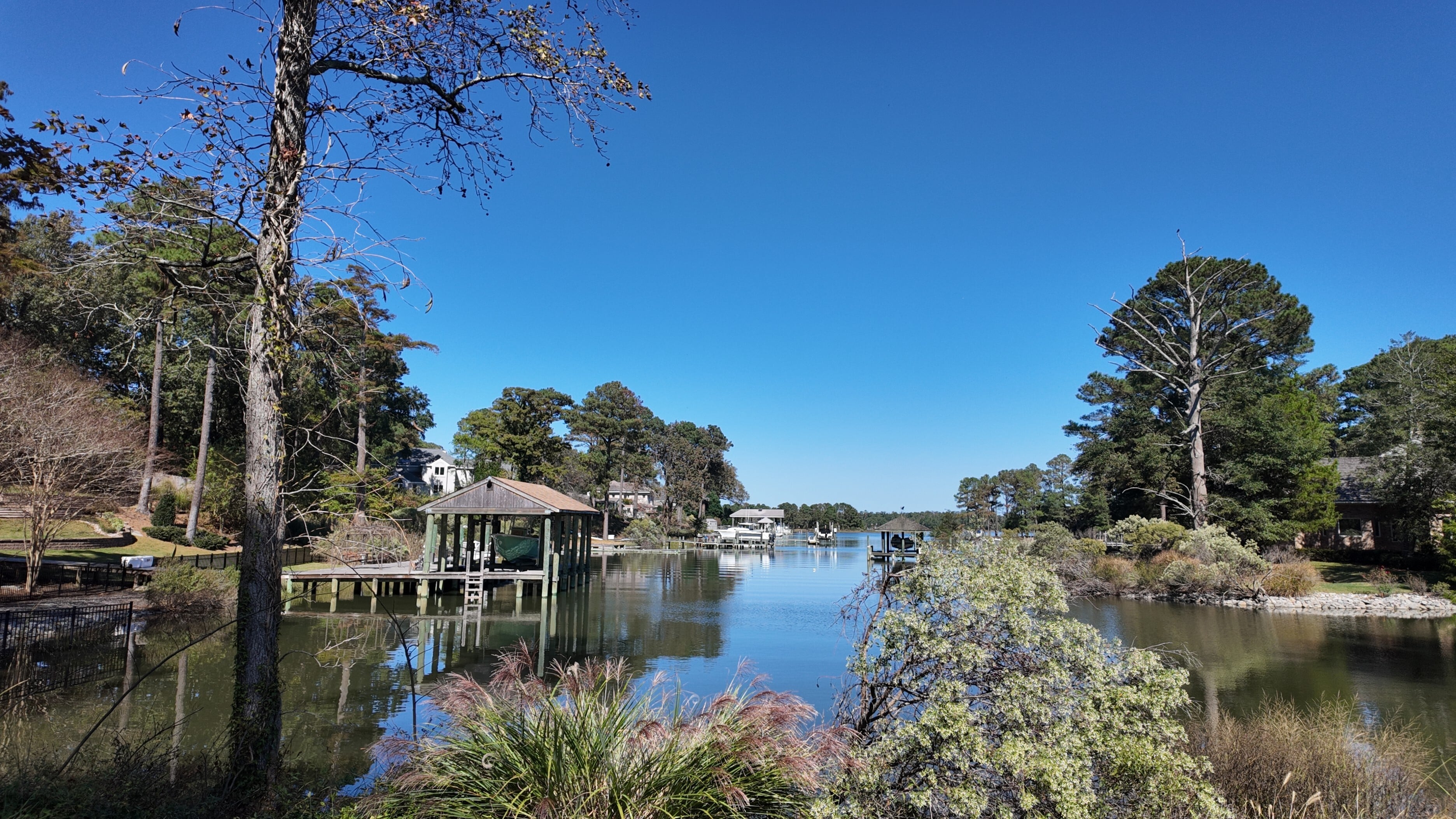
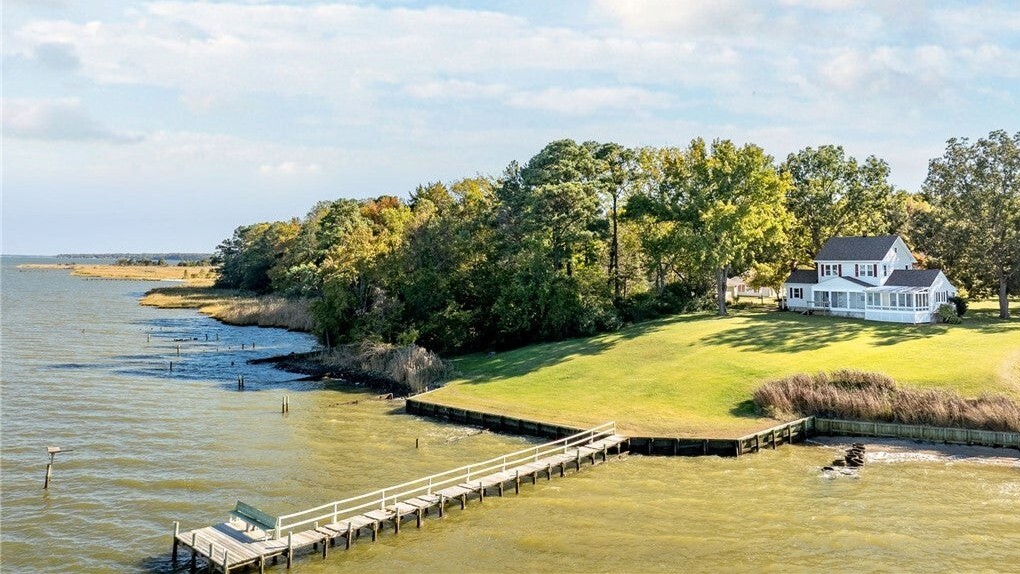

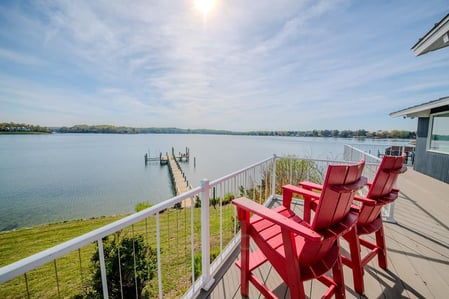
 You’ve found a beautiful waterfront home with a private dock, but is the water deep enough for your boat? It’s an important question that buyers sometimes overlook when searching for a home on the water.
Water depth can affect everything from the type of boat you can keep at your property to when you’re able to take it out. Before buying a waterfront home, it’s important to understand how water depth, changing tides and access to larger waterways could affect your plans.
How deep does the water need to be?
The amount of water depth you need depends largely on the type of boat you own or plan to buy. Every boat has a draft, which is the distance from the waterline to its lowest point below the surface. This tells you how much water a boat needs to float without touching the bottom.
Here’s a look at the approximate draft of some common boat types:
- Small fishing boats and skiffs: 1–2.5 feet
- Pontoon boats: 1.5–3 feet
- Cabin cruisers: 3–5 feet
- Larger sailboats: 4–7 feet or more
You’ll want some extra water beneath the boat to avoid hitting the bottom. For example, a boat with a 3-foot draft shouldn’t be operated or docked in 3 feet of water. That’s why it’s important to consider how tides affect water depth, especially along tidal creeks, rivers and bays. Water levels rise and fall throughout the day, meaning a dock with 5 feet of water at high tide might have only 3 feet at low tide, depending on the location.
How to check water depth before buying
Before you purchase a property, you’ll want to make sure the water is deep enough to meet your needs. Here are a few ways to find out:
- Ask: Sounds simple, but the seller or listing agent may already know how deep the water is at the dock. Find out whether they have any measurements, particularly at low tide, and when those measurements were taken.
- Measure it yourself: You can get a general idea of water depth by lowering a weighted rope into the water or using a handheld depth finder. It’s best to do this during low tide, keeping in mind that wind and weather can also affect water levels.
- Check the route to open water: Even if there’s plenty of depth at the dock, shallow channels, sandbars or other obstacles could make it difficult to reach larger waterways. Nautical charts can help you identify potentially shallow areas.
- Hire a professional: A qualified hydrographic surveyor can measure water depths and help identify potential concerns.
Making shallow water deeper
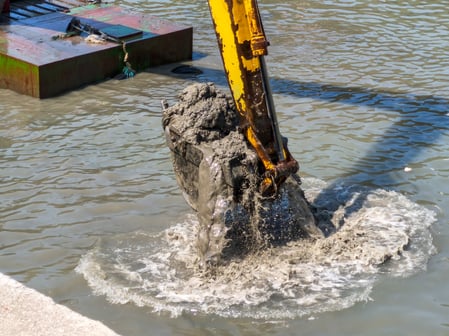 If you fall in love with a waterfront home but the water is too shallow for your boat, it doesn’t necessarily have to be a dealbreaker. You may be able to deepen the water through a process called dredging, which involves removing sediment from the bottom to increase water depth.
However, dredging can be expensive, potentially costing tens of thousands of dollars depending on the size of the project. It may also require permits from local, state and federal agencies. Before buying a property with plans to dredge, make sure it is allowed.
Find your waterfront home with Liz Moore & Associates
Our real estate agents at Liz Moore & Associates know the Tidewater region and can help you find a waterfront property that checks all the right boxes. We’d love to help you explore your options and find a place you’ll enjoy for years to come.
You can also find homes currently on the market in our digital Waterfront Property magazine, featuring listings throughout the region.
To learn more about buying and owning a home on the water in Tidewater Virginia, download our free waterfront guide below.

Stay up to date




Browse Posts







- November 2026
- October 2026
- September 2026
- July 2026
- June 2026
- May 2026
- April 2026
- February 2026
- January 2026
- July 2025
- May 2025
- April 2025
- March 2025
- February 2025
- January 2025
- October 2024
- September 2024
- August 2024
- July 2024
- June 2024
- April 2024
- March 2024
- February 2024
- January 2024
- December 2023
- November 2023
- October 2023
- September 2023
- August 2023
- July 2023
- June 2023
- May 2023
- April 2023
- March 2023
- February 2023
- January 2023
- December 2022
- November 2022
- October 2022
- September 2022
- August 2022
- July 2022
- June 2022
- May 2022
- April 2022
- March 2022
- February 2022
- January 2022
- December 2021
- November 2021
Browse by topics
- Buyers (16)
- Locals - 101 Reasons (0)
- Sellers (6)
- Williamsburg (1)
- New Homes (0)
- Home Sale Statistics & Trends (6)
- Community (45)
- event (0)
- Newport News (0)
- lizlocal-richmond-realestate (47)
- lizlocal-williamsburg-realestate (47)
- lizlocal-peninsula-realestate (43)
- York County (0)
- events (0)
- Richmond (0)
- lizlocal-NorthernNeck-realestate (41)
- Fords Colony (0)
- Home Page (0)
- event-Peninsula (0)
- Neighborhood Spotlight (7)
- Hampton (0)
- lizlocal (0)
- event-Williamsburg (1)
- event-Richmond (0)
- Poquoson (0)
- Seniors (8)
- lizlocal-richmond-community (20)
- lizlocal-williamsburg-community (22)
- About (27)
- lizlocal-Peninsula (0)
- careers (0)
- lizlocal-Richmond (0)
- Investors (0)
- lizlocal-Peninsula-community (18)
- lizlocal-Williamsburg (0)
- lizlocal-NorthernNeck-livelocal (13)
- relo-richmond-local (0)
- relo-williamsburg-local (0)
- relo-peninsula-local (0)
- Military (0)
- lizlocal-NorthernNeck-community (15)
- lizlocal-peninsula-livelocal (11)
- lizlocal-richmond-livelocal (11)
- timeline (0)
- MarketTalk (18)
- lizlocal-williamsburg-livelocal (11)
- Rivers Bend at Uncles Neck (0)
- Peninsula (2)
- Monticello Woods (0)
- 55+ (9)
- Downsizing (9)
- New Kent (0)
- Perkinson Homes (0)
- buyer (4)
- Oaks at Fenton Mill (0)
- WYD1 (8)
- commercial (8)
- lizlocal-NorthernNeck-food_and_drink (4)
- RVA Home Building (0)
- WYD3 (7)
- buy (7)
- lizlocal-richmond-food_and_drink (3)
- relo-richmond-news (0)
- waterfront (4)
- WYD4 (6)
- WYD5 (6)
- golf (0)
- relo-peninsula-news (0)
- relo-williamsburg-news (0)
- Brickshire (0)
- Chesterfield (1)
- Kingsmill (0)
- Quarterpath (0)
- Tidewater (4)
- WYD2 (4)
- Westport (0)
- land (0)
- Braemar Creek (0)
- Hilton Village (0)
- Kiln Creek (0)
- New Town (0)
- Patriots Landing (0)
- Queens Lake (0)
- Village Park (0)
- Virginia Beach (3)
- lizlocal-peninsula-food_and_drink (1)
- lizlocal-williamsburg-food_and_drink (0)
- 101 (0)
- Colonial Heritage (0)
- Coventry (0)
- Governors Land (0)
- Greensprings West (0)
- Midlothian (1)
- Port Warwick (0)
- Smithfield (0)
- Stonehouse (0)
- White Hall (0)
- seller (1)
- Brandermill (0)
- Brandon Woods (0)
- Data Centers (1)
- Greater Richmond (1)
- Hallsley (0)
- Hampton Park (0)
- Hampton Roads (1)
- Hanover (0)
- Home Values (1)
- Homeowners (1)
- Merrimac Shores (0)
- Norfolk (1)
- Real Estate Trends (1)
- Running Man (0)
- The Greenlands (0)
- The Settlement At Powhata (0)
- Villas at Oxford Run (0)
- West Point (1)
- Woodlake (0)
- kensington Woods (0)
- lizlocal-richmond-liz_local (1)
- lizlocal-southside-livelocal (1)
- press release (1)
- the point on fishers creek (0)

Liz Moore & Associates is a boutique real estate agency renowned for having the region's top agents, with extensive market knowledge and local expertise that is only achieved through relentless training coupled with Liz's extremely high standards for professionalism. When you're buying or selling a home, experience matters.